






How Buddhist Teachings Can Help You Overcome Anxiety and Fear
How Buddhist Teachings Can Help You Overcome Anxiety and Fear
Anxiety and fear are two emotions that most people experience at some point in life. Whether it’s the fear of the unknown, anxiety about future outcomes, or persistent worry about things we can’t control, these emotions can be overwhelming and debilitating. While modern psychology and medicine offer various methods to manage anxiety, Buddhist teachings provide a unique and timeless approach to understanding and transforming these emotions.
Buddhism, with its focus on mindfulness, compassion, and impermanence, offers practical tools to address the root causes of anxiety and fear. The teachings guide us to look inward, observe our emotions without judgment, and ultimately transform our relationship with fear and anxiety. In this article, we’ll explore how key Buddhist teachings can help you overcome anxiety and fear, bringing more peace and clarity to your life.
Understanding the Nature of Anxiety and Fear
Buddhism teaches that all human suffering, including anxiety and fear, stems from dukkha, a Pali word often translated as “suffering” or “dissatisfaction.” Dukkha arises from attachment, aversion, and ignorance—our tendency to cling to things we want, avoid things we dislike, and misunderstand the nature of reality.
Anxiety and fear are closely tied to these core causes of suffering. Anxiety is often rooted in attachment to a desired outcome or a fear of losing control. Fear arises from our aversion to discomfort or uncertainty. Both emotions are intensified by our ignorance of the impermanent and interconnected nature of all things. Buddhist teachings show us that by understanding the nature of anxiety and fear, we can begin to let go of these emotions and cultivate greater peace.
1. Mindfulness and the Power of Presence
One of the most important Buddhist teachings in addressing anxiety and fear is mindfulness—the practice of being fully present in the moment. Mindfulness helps us observe our thoughts and emotions without getting entangled in them. Instead of being swept away by anxiety about the future or fear of the unknown, mindfulness grounds us in the present moment, where we can respond to life with greater clarity and calm.
How Mindfulness Helps with Anxiety and Fear:
- Observing Without Judgment: Mindfulness allows us to observe anxious or fearful thoughts as they arise without labeling them as good or bad. This helps us detach from the emotional charge of these thoughts, reducing their intensity.
- Focusing on the Present Moment: Anxiety often arises from worrying about future events that may never happen. By practicing mindfulness, we bring our focus back to the present, reducing the mind’s tendency to spiral into “what if” scenarios.
- Breaking the Cycle of Reactivity: When we become aware of our thoughts and feelings through mindfulness, we create space between the stimulus (the thought or emotion) and our reaction. This allows us to respond to fear and anxiety with greater calm and composure.
Mindfulness Meditation Practice:
- Find a quiet place to sit comfortably, either on a cushion or chair.
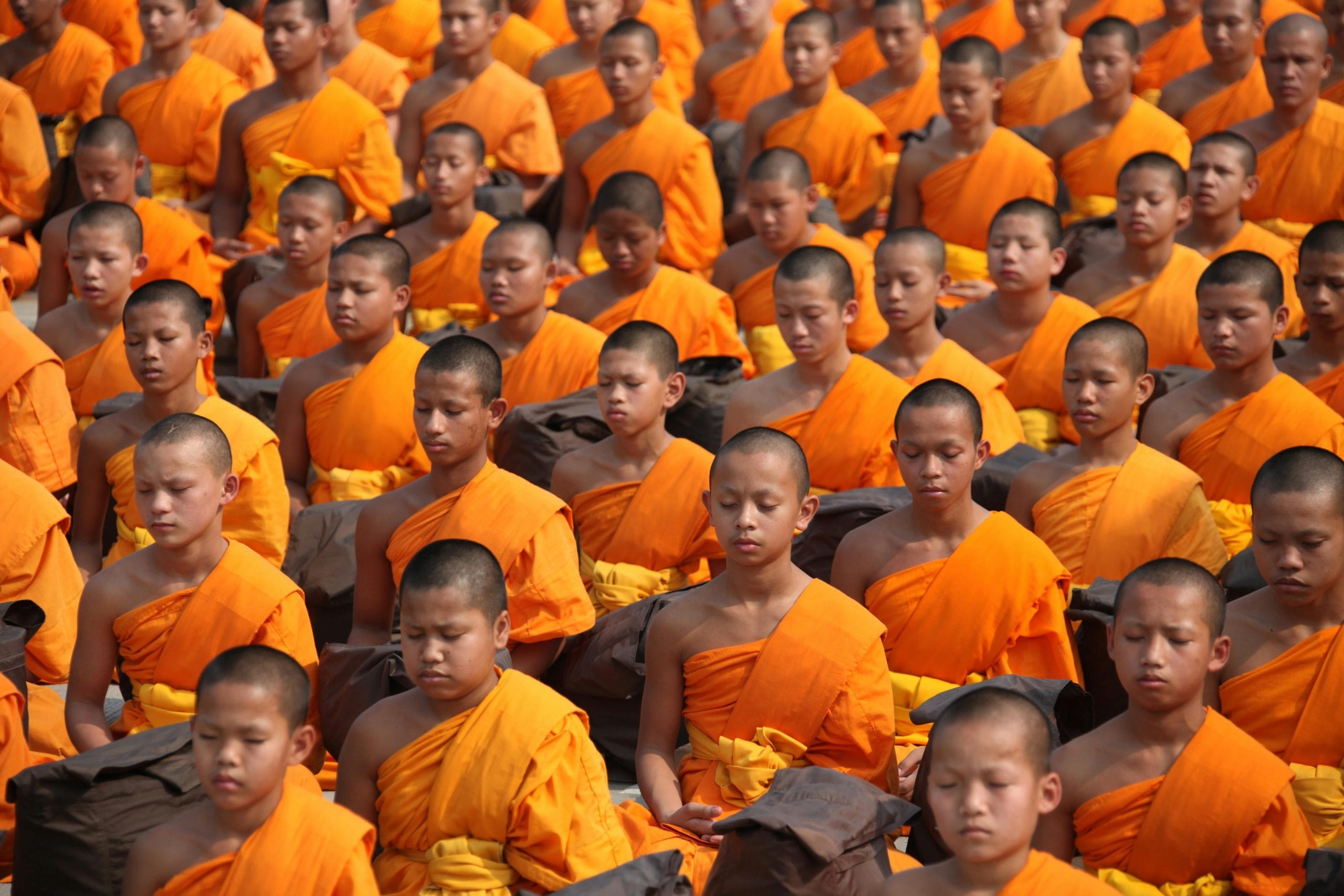
- Close your eyes and focus on your breath, observing the sensation of each inhale and exhale.
- If anxious or fearful thoughts arise, acknowledge them without judgment and gently return your attention to your breath.
- Start with just a few minutes a day and gradually extend your practice.
With regular mindfulness practice, you can learn to observe anxiety and fear without being controlled by them, cultivating a sense of inner peace and stability.
2. The Concept of Impermanence (Anicca)
One of the fundamental teachings in Buddhism is the concept of anicca, or impermanence. This teaching reminds us that everything in life is constantly changing—our thoughts, emotions, circumstances, and even our bodies are in a state of flux. Anxiety and fear often stem from our resistance to change and our desire to control or cling to things as they are. However, by accepting impermanence, we can reduce the grip of these emotions.
How Impermanence Reduces Anxiety and Fear:
- Letting Go of Control: Much of our anxiety comes from trying to control things that are beyond our control. The teaching of impermanence encourages us to release our need for control and accept that change is a natural part of life.
- Trusting the Process of Life: Understanding that all things are impermanent helps us trust that our current state of anxiety or fear will not last forever. Just as emotions and situations arise, they also pass.
- Embracing Uncertainty: Impermanence teaches us that uncertainty is inevitable, and resisting it only leads to suffering. By embracing the uncertainty of life, we can learn to move through fear and anxiety with greater ease.
Reflection on Impermanence:
Take time each day to reflect on the impermanent nature of life. Observe how your thoughts, emotions, and circumstances shift from moment to moment. Remind yourself that nothing stays the same forever and that this truth can be a source of liberation, not fear.
3. Letting Go of Attachment
Buddhism teaches that attachment—our clinging to people, things, outcomes, or ideas—is one of the main sources of suffering. When we become attached to a particular outcome or fear losing something we value, we create anxiety and fear around that attachment. By learning to let go of attachment, we can free ourselves from the constant worry and fear of loss.
How Letting Go of Attachment Helps with Anxiety:
- Releasing the Need for Specific Outcomes: Anxiety often arises when we are attached to a specific outcome and fear that it won’t happen. By letting go of this attachment, we allow ourselves to be open to whatever life brings, reducing our anxiety about the future.
- Finding Inner Freedom: Letting go of attachment doesn’t mean becoming indifferent. It means finding freedom in the understanding that external circumstances don’t define our happiness. This inner freedom helps us navigate fear and uncertainty with grace.
Practice of Non-Attachment:
Whenever you notice yourself becoming anxious about a particular outcome, pause and reflect on your attachment to that outcome. Ask yourself: “Am I placing my happiness or sense of security in something I cannot control?” Gently remind yourself to let go and trust in the flow of life.
4. Compassion and Loving-Kindness (Metta)
Anxiety and fear can sometimes make us feel isolated or disconnected from others, but Buddhist teachings emphasize the importance of compassion and loving-kindness (metta). Practicing compassion for yourself and others can help soften the intensity of fear and anxiety, replacing them with feelings of connection and empathy.
How Compassion Helps with Anxiety:
- Self-Compassion: When we experience anxiety, we can be hard on ourselves, judging our feelings as weak or irrational. Practicing self-compassion involves being kind to ourselves and accepting our emotions without judgment. This can reduce the inner turmoil associated with anxiety.
- Compassion for Others: Extending compassion to others who are also experiencing anxiety or fear can help us feel less isolated in our suffering. Realizing that we are all connected and that others share similar struggles fosters a sense of belonging and reduces fear.
Loving-Kindness Meditation Practice:
- Sit comfortably and close your eyes. Take a few deep breaths to relax.
- Begin by silently repeating the following phrases for yourself: “May I be happy. May I be healthy. May I be safe. May I live with ease.”
- Then, expand these wishes to others: “May all beings be happy. May all beings be healthy. May all beings be safe. May all beings live with ease.”
- As you repeat these phrases, try to cultivate genuine feelings of compassion and kindness for yourself and others.
5. The Middle Way: Finding Balance
Buddhism teaches the Middle Way, a path of balance between extremes. Anxiety can often arise from extremes—whether it’s extreme worry about the future or extreme attachment to specific outcomes. The Middle Way encourages us to find a balanced approach to life, embracing both effort and acceptance, action and surrender.
How the Middle Way Helps with Anxiety:
- Balance Between Action and Acceptance: Sometimes, anxiety comes from feeling we must fix or solve every problem immediately. The Middle Way teaches us to balance action with acceptance—doing what we can to address our concerns while accepting the things we cannot control.
- Avoiding Extremes of Thought: Anxiety often leads us to extreme thinking, such as catastrophizing or expecting the worst. Practicing the Middle Way encourages us to seek a more balanced perspective, recognizing that things are rarely as bad as we fear.
Applying the Middle Way:
When you feel anxious, take a moment to reflect on whether you are leaning toward extremes in your thinking. Are you overestimating the severity of a situation? Are you trying to control something that cannot be controlled? Practice finding the middle path of balance and moderation.
Conclusion
Buddhist teachings offer profound insights and practical tools for overcoming anxiety and fear. By practicing mindfulness, embracing impermanence, letting go of attachment, cultivating compassion, and finding balance through the Middle Way, we can transform our relationship with these emotions. While anxiety and fear are natural parts of life, they do not have to control us. With the guidance of Buddhist teachings, we can develop greater resilience, inner peace, and clarity, allowing us to navigate life’s challenges with greater ease and wisdom.